Ethel Cain is both the name under which Hayden Silas Anhedönia makes music and the name of a fictional character. Keeping those two meanings separate changes how “A House in Nebraska” and Preacher’s Daughter read. The song came from a piano sample and redirected an unfinished record. The album that followed built its imagery around an imagined refuge, not a literal Nebraska address or a memoir disguised as fiction.
A song that replaced an earlier album
Cain told W Magazine that she had started a different record in early 2018 and worked on it for about eight months. That project had a different sound, title, and feeling from what became Preacher’s Daughter. While downloading samples for it, she found a piano sample that stayed with her.
She described sitting on the floor of a bedroom in an old Florida house when the new song arrived quickly. In her account, “A House in Nebraska” took roughly 20 minutes to write and emerged as a dramatic piano ballad. The experience changed the direction of the larger project. Cain scrapped the earlier record, renamed the new one, and started building Preacher’s Daughter around the house she had imagined.
That sequence matters because it gives the song a specific role. “A House in Nebraska” was not simply one track added late to an established album concept. It supplied the image that organized the record Cain went on to make.
Nebraska as an imagined place
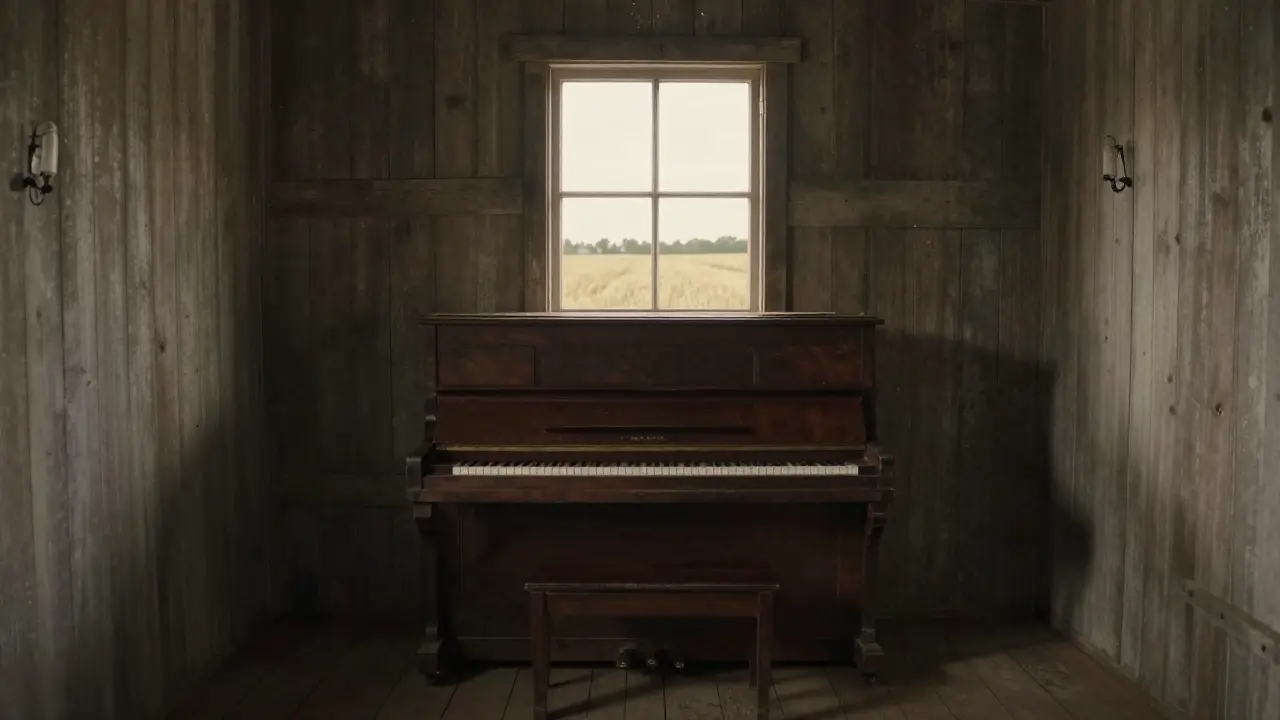
Cain did not describe a real home in Nebraska. She described an idea: Nebraska as the middle of the United States, a wide-open wheat field that keeps going. In that imagined place, she pictured escape, solitude, and life with the person she loved. She called it “heaven on earth,” a place where no one would bother them.
The house is therefore less a piece of real estate than a private setting for desire and absence. It gives the song a physical frame: a house, a field, distance, room to run. Those details let the album carry a dream of safety even while its wider setting remains tied to the South.
Cain’s description also explains why Nebraska can sit at the center of an album associated with Southern Gothic imagery. The state functions as a faraway interior destination. It is where the record’s longing points, rather than where the album’s full story is literally located.
| Element | What Cain described | Role in the album’s creation |
|---|---|---|
| Earlier project | A record developed for about eight months with a different sound, name, and feel | The version she abandoned |
| Piano sample | A sample discovered while downloading material for that earlier project | The prompt for “A House in Nebraska” |
| The song | A dramatic piano ballad written quickly in an old Florida house | The work that redirected the album |
| Nebraska house | An imagined wide-open refuge among wheat fields | The image around which Preacher’s Daughter took shape |
The Southern setting did not disappear
The imagined Nebraska home did not erase the American South from Cain’s writing. In the earlier interview, she connected her art to a Southern Baptist upbringing, church music, religious imagery, family history, and the tensions she saw in the region around her. Her father was a deacon, her mother sang in the choir, and she spent much of childhood around church activities and music.
That background helps explain why Preacher’s Daughter holds religious and patriotic images beside a dream of getting away. Cain said the album is set in the patriotic and religious South, as much of her music is. Nebraska sits within that artistic geography as a vision of distance. The contrast is sharp: the South supplies the social and visual material; the house in Nebraska supplies an imagined place of privacy and release.
It would be easy to flatten this into autobiography. The interviews do not support that move. Cain has spoken about personal experiences and about the symbols that feed her art, but she also draws a clear line between herself and the fictional figure whose story she tells.
Hayden Anhedönia and the character Ethel Cain
In a later W Magazine interview, Cain said that her personal story is not what she explores in her music. The article identifies Hayden Silas Anhedönia as the musician and Ethel Cain as a fictional preacher’s daughter in 1980s Alabama. The character’s story, not a literal recounting of Anhedönia’s life, is the narrative space Cain chose to pursue.
Cain described having many stories she felt driven to tell but had not finished. When the Ethel Cain story appeared, she decided to finish it and keep working through it. That comment gives useful context to Preacher’s Daughter. The record belongs to a continuing fictional narrative, and its emotional force does not turn the character into a documentary version of the artist.
The distinction is practical for listeners. A setting, image, or event in a song can borrow from places Cain knows, cultural material she grew up with, or fictional invention. None of those links proves that a song narrates a personal event. Her later account asks for a more careful reading: Hayden Anhedönia is the artist; Ethel Cain is the character whose story she is telling.
Why the song became the album’s center
“A House in Nebraska” gave Cain a picture large enough to hold an album. The picture is simple on its surface: an open field, a house, two people alone. Yet it contains the pressure that runs through the album’s world. The imagined home is peaceful because it is removed from other people, institutions, and scrutiny. Its appeal depends on distance.
Cain’s own account places this imagined refuge beside the religious and national imagery that shaped her early life and later became material for her songs. She has said that church was her whole world as a child and that music was a constant presence in it. She began piano lessons at eight, later made early recordings with GarageBand, and developed songs that used ambient vocals, organ sounds, synths, and heavy reverb.
Those biographical facts explain some of the materials available to the artist. They do not explain away the fictional narrative or turn the album into a report of her life. Cain’s interviews offer a more precise picture: an artist drawing on a remembered cultural world while writing a story through a character.
The house’s importance comes from its placement at the moment of change. Cain had an album in progress. A piano sample led to a new song. The song produced an imagined Nebraska refuge. That refuge became the image around which she rebuilt the record. Once that chain is clear, “A House in Nebraska” stops looking like a detached fan favorite and becomes the creative hinge of Preacher’s Daughter.
Reading the album without collapsing fiction into fact
The strongest reading respects both sides of Cain’s account. Her work draws on a Southern environment she knows well: church culture, family expectations, American symbols, regional humor, memory, and discomfort. At the same time, she has stated that Ethel Cain is fictional and that the music tells that character’s story.
That leaves room for artifice, exaggeration, and narrative design. It also leaves room for the imagined Nebraska home to mean more than a geographic reference. Cain described it as a mental image of openness and escape. The source does not establish a real address, a factual destination, or a hidden chronological account of the album’s plot.
The useful questions are narrower. What changes when the Nebraska house is read as a dreamed refuge rather than a literal location? How does the desire for that refuge sit beside the South’s religious and patriotic imagery? And how does Cain’s distinction between artist and character alter the way a listener hears the album’s narrative voice?
Cain’s own creative account gives the clearest answer to the first question. A single piano sample led her away from one unfinished record and toward another. The imagined house gave that second record its center.
