Funny Money Rapper: Who Is Funny $Money, the Milwaukee Artist Everyone Is Suddenly Searching For
A Milwaukee rapper who spells it with a dollar sign, and why one of the most confusing search terms in rap keeps leading back to the 414.
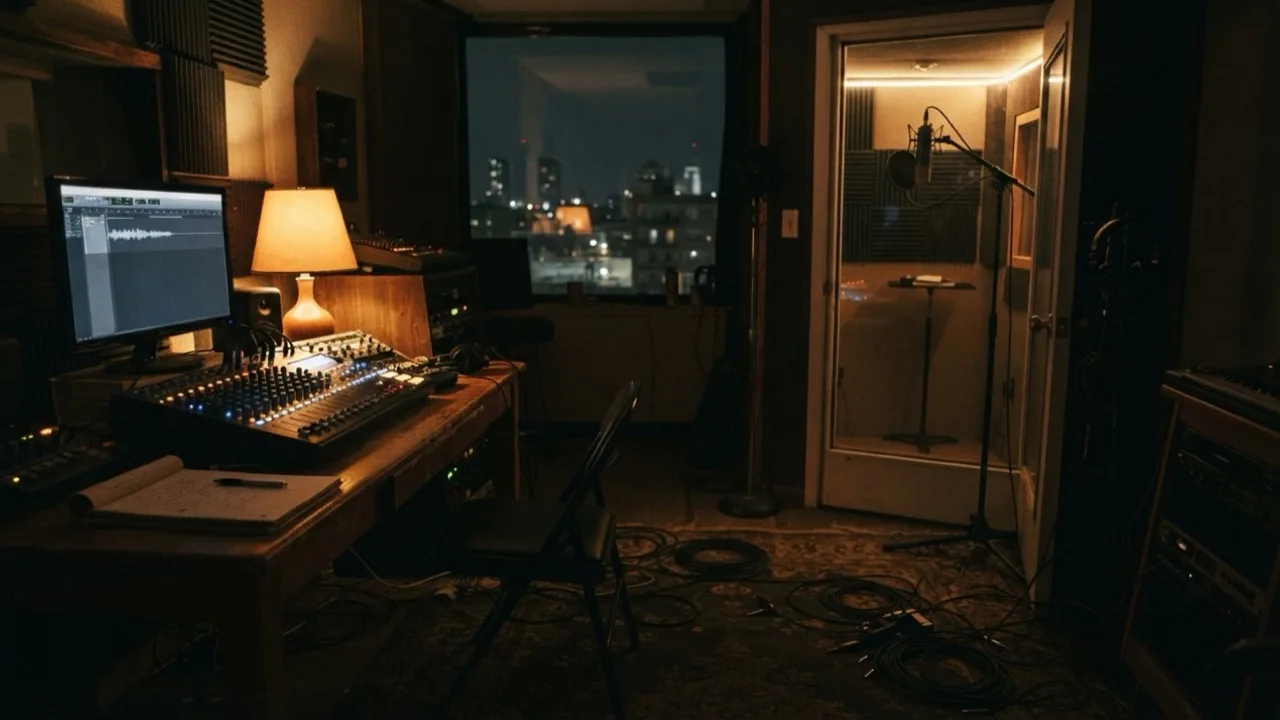
Who is the rapper people mean when they search Funny Money?
Type funny money rapper into a search box and you land in a small traffic jam. There is the phrase itself, old slang for counterfeit cash. There is a rock band that has carried the name for decades. There are unrelated songs titled Funny Money sitting on streaming services, uploaded by artists who have never met each other. The name behaves like a short clue with several perfectly defensible answers, which is exactly why the search keeps getting typed and almost never gets answered properly.
The artist most people are actually chasing spells it Funny $Money, dollar sign included, and raps out of Milwaukee, Wisconsin. The catalogue has been stacking up since the early 2020s across Spotify, Apple Music and a dedicated YouTube channel, and one line is stamped on nearly everything released under the name: but the money ain't funny. It works as a punchline and as a warning at the same time, and it tells you most of what you need to know about the tone of the records.
Where is Funny $Money from?
Milwaukee, and more precisely the 414, the area code locals wear like a family crest. That detail matters more here than it would almost anywhere else. Milwaukee rap did not arrive with a decades-long mythology attached, the way Detroit or Chicago did. It built its own in about five years, and it did it with a sound that is instantly recognisable once you have heard three songs: bouncing low-end drums, off-kilter flows that land slightly behind the beat, and slang so local it functions like the regional turns of phrase that only make complete sense to people raised inside them.
The turning point for the city came around the summer of 2022, when a Milwaukee-raised YouTuber named Tommy G started filming documentary-style videos inside the local rap scene. Those videos travelled far past Wisconsin. Around the same window, TikTok latched onto Milwaukee dance edits, and national music press followed. Chicken P, one of the city's most established names, signed with 10K Projects in 2023. What had been a tight local circuit became something outsiders were actively digging through, and digging is how a lot of listeners first bump into Funny $Money.
The city's pride in itself is part of the appeal. Milwaukee talks about its rappers the way it talks about its teams, with the same proprietary edge that turns every roster rumour into a week-long argument. Songs like the posse cut This Milwaukee, which puts Funny $Money alongside Baby Geeze, Big Celly and Big Steff, exist mainly to plant a flag. They are civic anthems dressed as street records.
How old is Funny Money and what is the real name behind it?
Here is the honest answer, and it is worth stating plainly because so many pages pretend otherwise: the legal name and the age of Funny $Money are not publicly documented. There is no verified birth date circulating, no interview on record establishing one, no official biography that lists it. Plenty of artists at this level keep that information deliberately offline, and inventing a number would be worse than admitting the gap.
That silence is itself a pattern worth understanding. Independent rappers who build audiences through streaming and short video rarely go through the traditional press cycle that produces those facts. Compare that with the searches around bigger names, where the questions are so persistent that entire articles exist to settle one basic point about a musician's official status. At the level Funny $Money operates, the paperwork simply never becomes public, and the music is the only document.
What does Funny $Money actually release?
The output is prolific and organised in series, which is a very Milwaukee habit. The Don't Talk 2 Much run started in 2022 and has continued through multiple volumes, with the first instalment running to sixteen tracks and the second to thirteen across roughly half an hour. There is also the project But The Money Aint Funny Vol. 1: STREETS, a fourteen-track set that turns the tagline into a full statement, and I Got the Hook Up Vol. 1: Big Bucks No Whammies, a title that shows the sense of humour running underneath the harder material.
The writing is dense, conversational and heavy on local reference, which is why listeners end up on lyric pages trying to work out what a line means. That instinct to pull a verse apart and decode the references buried inside it is a big part of how regional rap spreads now. Fans do the archaeology, then explain it to each other in comment sections.
The economics behind that volume are worth spelling out, because they explain the pace. Making a record no longer requires a studio budget. A laptop, an interface and a rented beat will do it, and a curious teenager can start understanding chords and rhythm on something as basic as a free browser toy built for exactly that. Fans, meanwhile, run tracks through tools that strip the vocals off a finished song to make their own edits. Visuals have got cheaper too, with independent artists now testing what a generated video clip can do for a track with no budget behind it. None of that makes a career on its own, but it removes every excuse not to release.
Why is Funny Money trending now?
There is no single dramatic event driving this, and that is the interesting part. What is happening is a search-shaped phenomenon. Streaming algorithms surface a Milwaukee track on a playlist, a clip runs past someone on a feed, the name Funny $Money appears in a credit list next to artists the listener already follows, and the reflex is immediate: type the name, find out who that is. The search term then collides with the generic phrase and the rock band, and the answer never quite arrives.
The mechanics are the same ones behind any small viral moment, whether it is a rapper or a snack that suddenly appears in everyone's feed at once. Something reaches a threshold of visibility, curiosity spikes, and the internet discovers there is no proper page explaining it. That gap is precisely the sort of thing fotobreak exists to close, and it is why a name with no scandal attached can still climb.
Who does Funny $Money work with?
Collaboration is the engine of the Milwaukee scene, and the guest lists tell the story better than any biography would. Funny $Money has appeared alongside Chicken P and Joe Pablo, two of the city's most recognisable voices, and worked with Juicster on the track Patience. The posse cut Dat One Kind gathers Deadend Quan, Superthrowed Fayfay, Ghost, Juicster and Joe Pablo on the same beat. There are Milwaukee cypher recordings, and features scattered across smaller local projects.
The wider cast a curious listener will meet next includes MarijuanaXO, Munch Lauren, StevedaStoner, Spaidez, 414BigFrank and 414JungleBaby. It is a genuine ecosystem rather than a hierarchy, closer in spirit to the regional scenes that produced artists whose reputations were built city-first and national second. The extended tagline attached to Funny $Money makes the value system explicit: blood makes you related, loyalty makes you family. It is the sort of line people write into cards for a new arrival in the family, repurposed as a business philosophy.
What about the personal life and the money?
Almost nothing is publicly established, and there is no reason to guess. Relationship searches follow every rising musician, in the same way that fans endlessly ask who a breakout singer might be seeing, and the honest answer here is that nothing is on the record. The same applies to earnings. Independent rap income comes from streams, features, merchandise and shows, and none of those figures are disclosed. Anyone publishing a confident number is doing what the net worth pages built around athletes and performers usually do, which is estimate and hope. Real talk about money in music sounds a lot less certain than the confident wealth-building pitches that dominate business feeds.
Where can you follow Funny $Money, and what happens next?
The music lives on Spotify, Apple Music and the artist's YouTube channel, where the full series of projects sits together. That is the practical starting point: begin with Don't Talk 2 Much, then move to But The Money Aint Funny Vol. 1: STREETS, then follow the feature credits outward into the rest of the 414.
What comes next is the same question hanging over the whole Milwaukee wave. The city has proved it can generate a sound and export it. The harder step is the one that follows: consistent touring, the kind of run that fills rooms night after night the way a dance act builds a city-by-city following, and eventually a slot on a bill where the crowd is not from your hometown, the way a major festival stage tests whether an audience travels with you. Merchandise matters too, since a recognisable logo can outlive a single record, and resale culture has made hoodies and one-off drops into a market of their own, tracked closely by people who understand how to move limited streetwear on secondary platforms.
For now, the correct summary is short and true. Funny $Money is a Milwaukee rapper with a deep independent catalogue, a memorable tagline, and a name unfortunate enough to collide with a common English phrase and a rock band. That collision is the whole reason the search exists. If you came looking for the person behind it, you have now got further than most pages will take you, and there is plenty more in our running file of the names people are looking up right now.
People also ask
Who is the rapper called Funny Money?
The rapper most people mean is Funny $Money, an independent artist from Milwaukee, Wisconsin, known for the tagline but the money ain't funny and for a run of projects including the Don't Talk 2 Much series and But The Money Aint Funny Vol. 1: STREETS.
Where is Funny $Money from?
Milwaukee, Wisconsin, in the 414 area code. The artist is part of the local rap scene that gained national attention from around 2022 onwards through YouTube documentaries, TikTok edits and music press coverage.
What is Funny $Money's real name and age?
Neither is publicly documented. There is no verified legal name or birth date on the record, which is common for independent artists who build an audience through streaming rather than traditional press.
Who has Funny $Money worked with?
Collaborators include Chicken P, Joe Pablo and Juicster, plus posse cuts such as Dat One Kind featuring Deadend Quan, Superthrowed Fayfay and Ghost, and the Milwaukee anthem This Milwaukee with Baby Geeze, Big Celly and Big Steff.
