Who is Michael Dell? The founder behind Dell Technologies
Michael Dell is the Texas entrepreneur who turned a dorm-room computer business into Dell Technologies.
Who is Michael Dell and why is he trending now?
Michael Dell is the 61-year-old founder, chairman and chief executive officer of Dell Technologies, the Texas company best known for personal computers and enterprise technology. He is trending again after he and his wife, Susan Dell, appeared at the White House on October 7 to discuss their previously announced $6.25 billion commitment connected to Trump Accounts, a federal investment-account program for children. Their commitment is intended to provide $250 deposits for 25 million eligible children. It is a huge number, a politically visible event and a reminder that Dell is no longer only the man whose name appears on a laptop lid.
The attention also makes sense because his story sits at the intersection of several big American conversations: artificial intelligence, the astonishing wealth created by tech stocks, philanthropy and the question of how families build a financial future. On fotobreak's coverage of people the internet is talking about, those are exactly the moments when a familiar name suddenly needs a fuller explanation.
How did Michael Dell build Dell Technologies?
Michael Saul Dell was born in Houston, Texas, on February 23, 1965. His father was an orthodontist and his mother worked in finance, but young Michael Dell was drawn to both technology and selling. As a teenager, he reportedly experimented with selling subscriptions and computer parts, learning early that knowing what a customer wanted could be as valuable as the product itself.
He enrolled at the University of Texas at Austin with medicine in mind, then began assembling and selling upgraded personal computers in 1984. His starting capital was $1,000. The original business, PC's Limited, cut out the traditional retail middleman by selling directly to buyers. Customers could order a machine configured for their needs, an unusually practical idea when many computers came in fixed, expensive packages. Dell left university to concentrate on the company, which soon became Dell Computer Corporation.
The direct-sales model changed how people thought about buying technology. It also offers a useful contrast with the brand-building paths of newer hardware leaders, including Apple executive John Ternus. Dell's early advantage was not a single magical machine. It was listening to customers, managing inventory tightly and making the order process simpler than a trip to a computer store.
What does Michael Dell actually do today?
Dell Technologies is headquartered in Round Rock, near Austin, and Michael Dell remains its chairman and CEO. His day-to-day job is not testing every laptop or troubleshooting an office printer. He helps set the company's long-term direction, works with senior leaders and major customers, and represents Dell in conversations about the technology businesses and governments need to run.
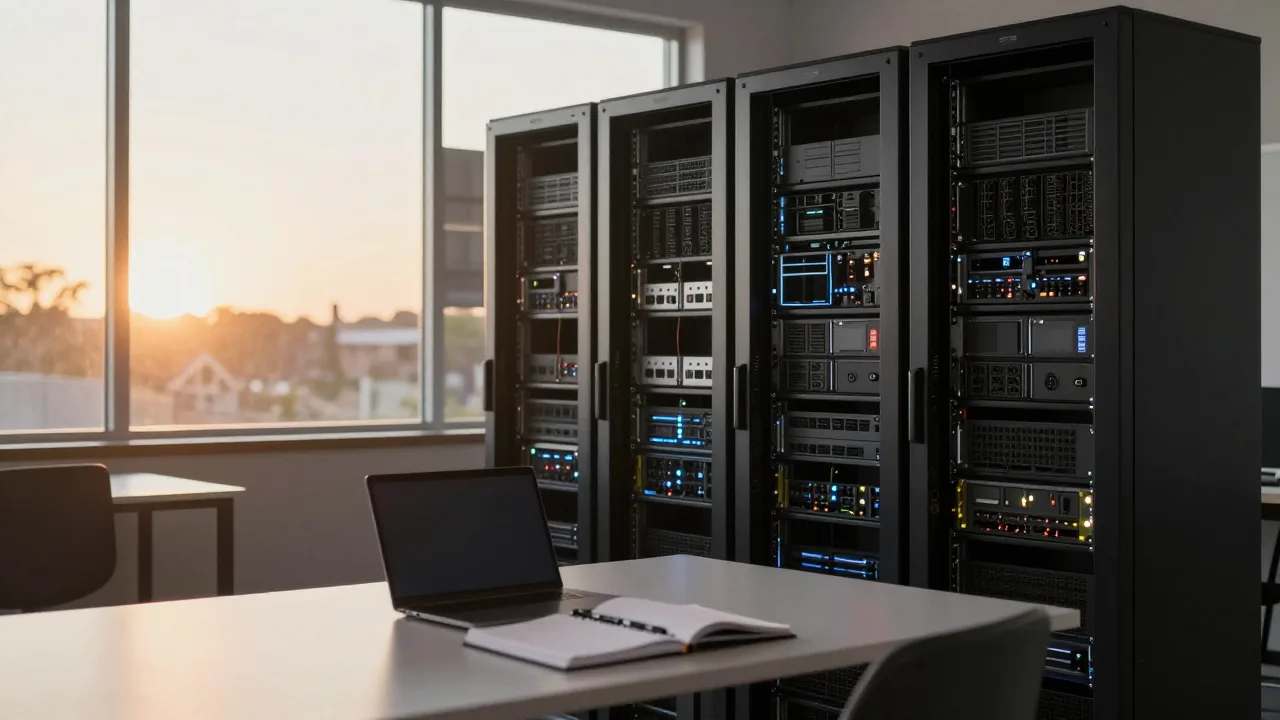
That now means far more than consumer PCs. Dell sells servers, storage, networking, cybersecurity services and workplace technology alongside its familiar computers. The company has become especially associated with the infrastructure required for AI, the large-scale equipment that lets organizations train and use advanced models. That is why a simple question about where Nvidia chips are made connects to Dell's world. Chips are only one part of the system. Someone still has to build, cool, connect and operate the data-center equipment around them.
For ordinary readers, AI can feel abstract until it becomes a tool that changes what they make or watch, from AI vocal-removal tools to new AI video generators. Dell's role is mostly behind that visible layer, supplying the heavy equipment and services that make business-scale computing possible.
Why has his wealth become part of the story?
Michael Dell's fortune has climbed and fallen with the market value of Dell Technologies, Broadcom shares received after VMware's sale, and investments managed through his family office, DFO Management. Forbes and other wealth trackers have placed him among the richest people in the world during 2026, but those rankings move constantly. A net-worth estimate is not a salary, and it should not be mistaken for cash he earns in a year.
What matters more is how the fortune was built. Dell kept a major ownership stake in the business he founded, took the company private in 2013, then helped guide its return to the public markets after the EMC acquisition created Dell Technologies in 2016. That long ownership story is why readers searching him often move from a founder's biography to questions about how a company founder's wealth is calculated. It is also why Dell is discussed alongside high-profile entrepreneurs such as Grant Cardone, although their businesses and public styles are very different.
DFO Management gives the Dell family another presence beyond computers, with investments that have included areas such as hospitality and credit. That wider investor role explains why his name can surface in conversations that otherwise belong to figures like commercial real-estate developer Larry Silverstein. Still, Dell's central public identity remains the technology company bearing his name.
Who are the people around Michael Dell?
Susan Dell is the most important collaborator in his public life. The couple married in 1989, have four children and founded the Michael & Susan Dell Foundation in 1999. Susan Dell is a co-founder and chair of the foundation's board, not simply a supporting character in a business story. Together, they have focused much of their charitable work on education, health and economic opportunity, particularly in Central Texas, India and other communities where the foundation operates.
The foundation's work helps explain why the October event drew attention. A $250 contribution may sound modest beside the headline total, but the plan is built around reaching millions of children and encouraging families to start saving. It is the same basic curiosity that brings readers to guides about getting access to credit without a long history, only directed toward a child investment account rather than borrowing. The program is public policy, and the Dells' commitment is philanthropy, so neither should be confused with a Dell Technologies product.
Education is another through-line. Tools such as Chrome Music Lab for classroom creativity and practical resources like online times-table practice show the everyday end of a larger idea: access to technology matters most when people can use it to learn. The Dells' foundation operates at a much larger scale, but the purpose is recognizable.
Where is Michael Dell from and where does he work?
Dell is firmly a Texas figure. He was born in Houston, built his first company in Austin and has kept Dell Technologies rooted in the Austin area. The region is now one of America's major technology centers, yet his story still carries the older Texas startup image: a young founder, a dorm-room business and a company that grew by solving a practical problem.
That local continuity is one reason the Dells have put substantial energy into Central Texas projects, including education and health care. It is also why his profile feels different from a founder who simply moves wherever the market is hottest. Readers are often interested in the family and hometown threads behind a successful young entrepreneur, as in the interest around Zach Yadegari's parents. With Michael Dell, the more useful thread is place. Texas has remained the setting for his company, his philanthropy and much of his public work.
What can people follow, buy or learn from Michael Dell?
If you want reliable updates, follow Michael Dell's public posts on LinkedIn or X, then check Dell Technologies announcements and financial filings for the detail behind a headline. His posts tend to focus on technology, customers, leadership, philanthropy and major company news rather than the day-to-day lifestyle content associated with influencers. He has also written two books, Direct from Dell and Play Nice But Win, which are useful for readers who want his version of the company's history.
The practical products are Dell Technologies computers, monitors, servers, storage and business services. The broader lesson from Dell's career is less glamorous: understand the buyer, make a complicated purchase easier and keep improving the system behind it. That applies to a global technology company, but also to a much smaller online venture, including learning how to sell on a resale platform or building the routines that make a business dependable. Even a digital wall calendar has something in common with Dell's founding instinct, turning a messy task into a clearer process.
What happens next for Michael Dell?
Three stories will likely keep Michael Dell in the news: the rollout and public debate around the child-account commitment, Dell Technologies' place in the AI infrastructure boom, and the changing value of the holdings that made him one of the world's wealthiest people. None of those stories is simple, and all of them can produce headlines that make his name spike in search.
For now, the short answer is straightforward. Michael Dell is a Texas technology founder who still runs the company he started at 19, while he and Susan Dell have become major philanthropic figures. The current surge in attention comes from their visible return to the Trump Accounts initiative, but the larger reason people keep looking him up is that his old direct-to-customer computer business became part of the machinery behind today's digital economy.
People also ask
Who is Michael Dell?
Michael Dell is the founder, chairman and CEO of Dell Technologies. He started the computer company in 1984 while studying at the University of Texas at Austin.
How old is Michael Dell?
Michael Dell was born on February 23, 1965. He is 61 years old as of October 2026.
Why is Michael Dell trending now?
He and Susan Dell returned to the White House in October 2026 to discuss their $6.25 billion commitment tied to Trump Accounts for children.
What does Michael Dell do now?
He remains chairman and CEO of Dell Technologies, helping lead its work in PCs, enterprise infrastructure, data centers and AI-related technology.
