Rich Rowland Stats: The Full Career Numbers Behind the Tigers and Red Sox Catcher
The complete major league numbers for the small town California catcher who spent six seasons with the Detroit Tigers and Boston Red Sox.
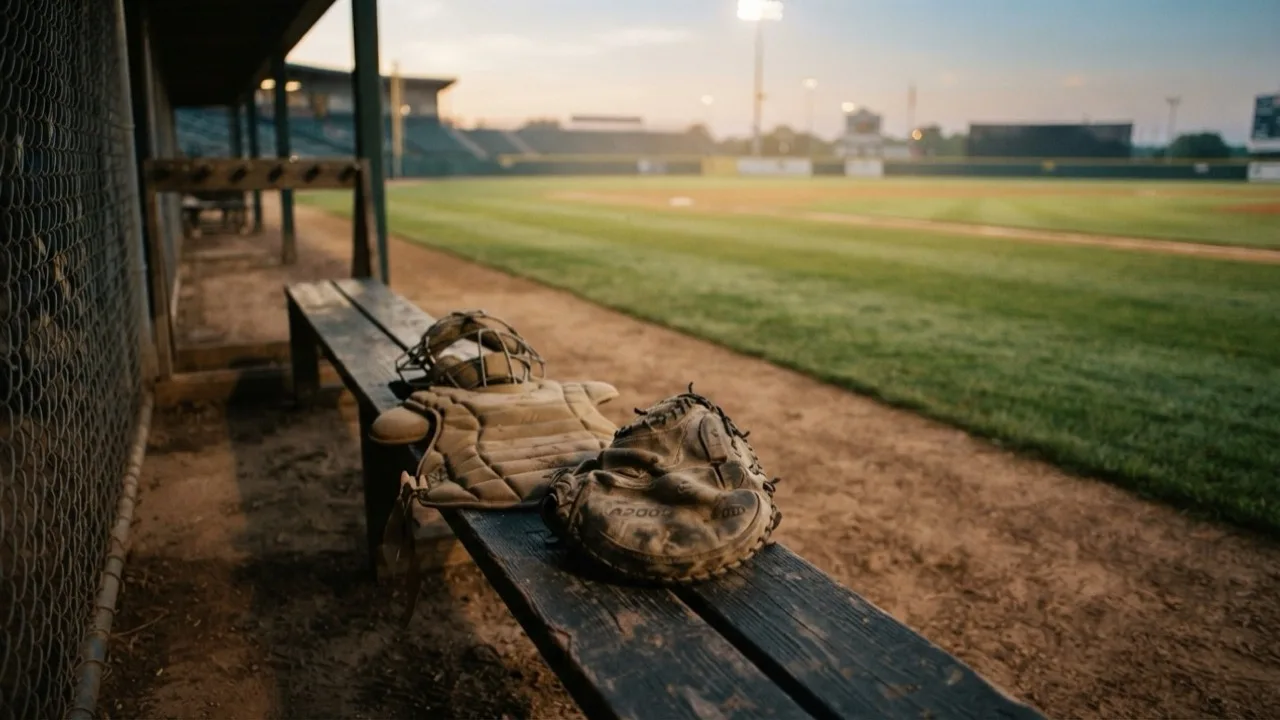
Rich Rowland stats: the complete major league line
If you came here looking for Rich Rowland stats, here is the whole record in one breath. Across six seasons in the major leagues, from 1990 to 1995, the right handed catcher appeared in 98 games, took 230 at bats, and collected 49 hits, 8 doubles, 9 home runs and 26 runs batted in. He scored 22 runs, drew 22 walks and struck out 71 times. His career batting average was .213, his on base percentage .281, his slugging percentage .365. No triples, no stolen bases.
Those totals are easy to underrate, which is exactly why they deserve to be laid out properly. Rowland was a minor league slugger who kept getting short windows at the top level, so his big league record reads like a set of snapshots rather than a film. Modern fans are used to a full season page for every player, the kind of page that fills up for a Detroit ace such as the Tigers pitcher tied to Los Angeles trade chatter or an everyday Boston bat like the Red Sox slugger Rafael Devers. Rowland's page is shorter, and the story lives in how the pieces fit together.
Year by year: the numbers people actually search for
| Year | Team | G | AB | H | HR | RBI | AVG |
|---|---|---|---|---|---|---|---|
| 1990 | Tigers | 7 | 19 | 3 | 0 | 0 | .158 |
| 1991 | Tigers | 4 | 4 | 1 | 0 | 1 | .250 |
| 1992 | Tigers | 6 | 14 | 3 | 0 | 0 | .214 |
| 1993 | Tigers | 21 | 46 | 10 | 0 | 4 | .217 |
| 1994 | Red Sox | 46 | 118 | 27 | 9 | 20 | .229 |
| 1995 | Red Sox | 14 | 29 | 5 | 0 | 1 | .172 |
| Career | 2 teams | 98 | 230 | 49 | 9 | 26 | .213 |
Split by uniform, the picture sharpens. In Detroit he played 38 games over four seasons, with 83 at bats, 17 hits, five runs batted in and no home runs at all. In Boston he played 60 games over two seasons, with 147 at bats, 32 hits, 21 runs batted in and every single one of his nine career home runs. Put another way, the entire power side of his major league record belongs to one team, and almost all of it to one summer.
Who was Rich Rowland?
Rich Rowland was a professional baseball catcher, born on 25 February 1964 and listed in the record books under the given name Richard Garnet Rowland. He was a big, strong right handed hitter who caught, and who also turned up at designated hitter, first base and third base when a manager needed a body. He signed as a late round pick, spent nine seasons in the minor leagues between 1988 and 1997, and even took the mound in three minor league games, the sort of detail that turns a stat page into a conversation.
Where was Rich Rowland from?
He came from Cloverdale, California, a town of roughly three thousand people about ninety miles north of San Francisco, and he stayed connected to it his whole life. His father worked as a lumber mill foreman, his mother was an artist, and Rowland grew up in the kind of place where the same handful of kids play every sport on the calendar. At Cloverdale High he did exactly that. He was an all conference quarterback who threw for more than 1,500 yards and 10 touchdowns as a senior while running for 713 yards and 13 touchdowns, earning offensive player of the year honours in his league, and he averaged more than 13 points a game in basketball on a title winning team. That kind of small town, everything at once athlete is a recognisable type, closer to the tall small town prospects readers look up by height than to a manufactured academy product.
How did Rich Rowland get to the major leagues?
Slowly, and by a route that would not survive a modern recruiting spreadsheet. He spent a short spell at Ventura College in 1982, then went to work in forestry. Baseball came back to him in 1987 when a coach recommended him to Mendocino College in Ukiah, where he hit .462 as a catcher. The Detroit Tigers took him in the 17th round of the June 1988 draft, and he began climbing.
The minor league version of Rowland was a genuinely dangerous hitter. At Triple A Toledo in 1992 he hit 25 home runs and was named the organisation's minor league player of the year by a national newspaper, and in 1993 his slugging percentage of .548 ranked fourth in the International League. The gap between that production and his 38 scattered games in Detroit is the oldest story in baseball: a team already set at catcher, a young man who could hit but had to wait. Anyone who follows the eligibility and opportunity puzzles that dominate college roster decisions in conferences like the SEC will recognise the shape of it, and roster crunches still end careers the way they did then, as recent releases such as a running back cut loose by Washington keep reminding fans.
What happened in 1994, his best season
On 1 April 1994 the Tigers traded Rowland to the Boston Red Sox for catcher John Flaherty, and at last he got a real run of games. Backing up Damon Berryhill, he played 46 games, took 118 at bats, hit 27 hits including nine home runs, drove in 20 runs and posted a .229 average with a career high .483 slugging percentage. For a backup catcher in his thirties, that is a season worth framing.
Then the 1994 players' strike ended the season in August, and the momentum went with it. He returned for 14 games in 1995, went 5 for 29, and played his final major league game on 19 June 1995. Careers rarely end with a ceremony. They end with a roster move, the same quiet paperwork that still greets journeyman hitters like the well travelled outfielder Randal Grichuk or catchers on the roster bubble such as the utility catcher Mickey Gasper.
Why is Rich Rowland in the news right now?
His name is being searched because Rowland died on 25 August 2026 in Cloverdale, at the age of 62. His son Robby shared the news publicly on 27 August, and no cause was given. That is the entire publicly established fact, and it is where this article leaves the subject.
What is worth explaining is the mechanics of the attention that followed. When a former major leaguer dies, the big outlets publish two lines and a career average, and the number they print, .213, is the least interesting thing about him. The searches that spike are for the details those briefs skip: his stats year by year, his teams, his hometown, his family. That is the gap this piece on fotobreak is written to fill, and it is the same reason readers dig into the people who built the machinery of sports coverage, such as the founder of the network that made box scores a nightly ritual, rather than settling for the headline.
Rich Rowland family: his wife and his two sons
Rowland married Carol Ann in September 1987, before the draft and before any of it was certain, and the family remained based in Cloverdale. Their two sons both became professional ballplayers, which is the part of the story that turns one search into a longer read.
Richie, born in August 1988, was a catcher and first baseman drafted by Colorado in 2007. He chose college at Campbellsville University in Kentucky instead, then signed with Arizona in 2010. Robby, born in December 1991, is a right handed pitcher taken by Arizona in the third round of the 2010 draft. The brothers shared a rookie league summer at Missoula, Montana, in 2010. Robby pitched for years in the minor leagues, reaching Double A, and kept going through independent circuits and winter ball, including a season with Mayaguez in Puerto Rico as recently as the 2023 to 2024 winter. Neither brother reached the majors, and both built long careers anyway, which is its own kind of achievement. Players taking their trade abroad to keep playing is now common enough that fans track it closely, as they did when a young guard left the NBA to play overseas.
What did Rich Rowland do after baseball?
He went home and went to work. Rowland spent years in the timber industry around Cloverdale, an on and off living as the business declined, and in later years he turned to woodworking, making furniture from redwood. It is a fitting second act for a man raised by a mill foreman and an artist, and a reminder that most professional athletes do not retire into ownership boxes the way a franchise owner such as Jeanie Buss occupies one. They retire into towns, trades and kitchen tables.
Where to follow the story next
There is no official Rich Rowland account to follow. The living thread of the story runs through his sons, particularly Robby, whose playing updates and tributes have circulated on his own social channels, and through the Cloverdale community that produced all three of them. His baseball cards from the early 1990s still trade cheaply on collector sites, which is how a lot of readers first encounter a name like his.
For anyone who wants the numbers on a page rather than in a headline, the table above is the complete major league record: 98 games, 230 at bats, 49 hits, 9 home runs, 26 runs batted in, a .213 average. Small numbers, hard earned, and now attached to a story people are finally taking the time to read. Our rolling coverage of the names people are searching follows the same instinct that sends readers chasing the trade rumours around a veteran shooter, the career arc of a former Tigers pitcher, or even a stubborn crossword clue about the north star at eleven at night. Curiosity does not sort itself by importance.
If the through line here has a shape, it is patience. A quarterback from a town of three thousand becomes a forestry worker, becomes a junior college catcher, becomes a 17th round pick, becomes a Triple A slugger, and gets one real summer in a Boston uniform before a strike takes it away. Then he raises two ballplayers, works with timber, and builds things out of redwood. The scene around him, the small town coaches and long bus rides, is the same one that shapes youth football under coaches like the Packers head coach known for developing young players, and it produces far more Rowlands than superstars. Northern California readers may recognise the rest of the picture too: the timber, the rivers, the weekends spent near the water in the sort of boat covered in guides to the best aluminium fishing boats. That was the life the stats were built around, and it is the part no box score records.
People also ask
What were Rich Rowland's career stats?
In six major league seasons from 1990 to 1995 he played 98 games with 230 at bats, 49 hits, 8 doubles, 9 home runs, 26 runs batted in, 22 runs scored, 22 walks and 71 strikeouts, batting .213 with a .281 on base percentage and a .365 slugging percentage.
What teams did Rich Rowland play for?
He played for the Detroit Tigers from 1990 to 1993 and the Boston Red Sox in 1994 and 1995. Detroit traded him to Boston on 1 April 1994 for catcher John Flaherty. All nine of his major league home runs came in a Red Sox uniform.
How old was Rich Rowland?
He was born on 25 February 1964 in Cloverdale, California, and was 62 years old at the time of his death on 25 August 2026 in the same town. No cause was made public.
Who are Rich Rowland's sons?
Richie Rowland, born in 1988, was a catcher and first baseman who played at Campbellsville University and signed with Arizona in 2010. Robby Rowland, born in 1991, is a right handed pitcher drafted by Arizona in the third round in 2010 who reached Double A and later pitched in independent and winter leagues.
What was Rich Rowland's best season?
The strike shortened 1994 season with Boston. He played 46 games, took 118 at bats, had 27 hits with nine home runs and 20 runs batted in, and hit .229 with a career high .483 slugging percentage before the players' strike ended the season.
