Annie Dillard quotes: the lines that explain why readers return to her
Annie Dillard was a Pulitzer Prize-winning American writer whose exacting prose made ordinary attention feel like an adventure.
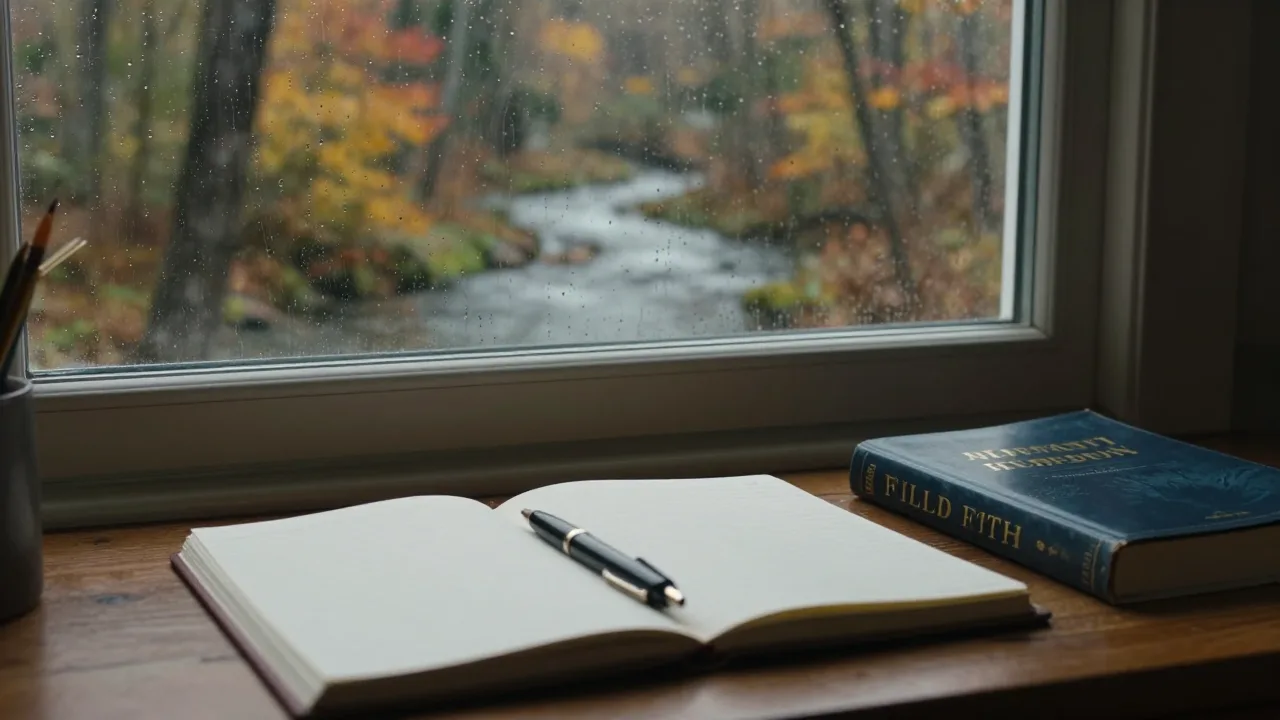
Annie Dillard quotes readers keep coming back to
The most useful Annie Dillard quotes do not work like tidy motivational slogans. They ask the reader to look harder, and sometimes to sit with what cannot be neatly explained. That is why the search has surged after Dillard died on September 15, 2026, aged 81. People are returning to a writer whose sentences made a creek, an eclipse, a moth or an afternoon walk feel immense. Fotobreak news coverage often follows the fast turn of attention, but Dillard's renewed audience is also a slower kind of discovery.
Here are four reliable places to start. From Pilgrim at Tinker Creek: “We wake, if we ever wake at all, to mystery.” From The Writing Life: “How we spend our days is, of course, how we spend our lives.” From the essay collection Teaching a Stone to Talk: “Nature's silence is its one remark.” And, from the same body of work: “At a certain point you say to the woods, to the sea, to the mountains, the world, Now I am ready.”
Each line is brief, but none is casual. Dillard wrote to unsettle lazy seeing. A reader who comes for a quote may stay for the argument around it, much as someone who starts with a profile of Simon Rich can end up interested in the larger body of work behind a familiar name.
Who was Annie Dillard?
Annie Dillard was born Meta Ann Doak in Pittsburgh, Pennsylvania, on April 30, 1945. She grew up in a lively, bookish family and later wrote about that childhood in the memoir An American Childhood. Long before she became known as Annie Dillard, she was a serious young reader with wide-ranging interests in drawing, rocks, birds, insects, ponds and streams. That restless curiosity became the engine of her work.
She attended Hollins College in Virginia, where she studied literature and wrote a master's thesis on Henry David Thoreau. Thoreau mattered to Dillard, though she never copied him. Both writers built books from close observation of the natural world, but Dillard's voice was sharper, stranger and more alert to fear. Her pages can move from a frog at a pond to questions about faith, time and death without losing their grip on a physical detail.
In 1974, at 28, Dillard published Pilgrim at Tinker Creek, a nonfiction narrative rooted in the fields, woods and waterways near Roanoke, Virginia. The book won the 1975 Pulitzer Prize for General Nonfiction and made her one of America's distinctive literary voices. Her career belongs in the same long conversation as artists whose work lasts beyond a first hit, from Andy Williams and his enduring catalogue to folk singer Randy Burns.
Why are Annie Dillard quotes trending now?
The immediate reason is public mourning. The Associated Press reported that Dillard died at her home in South Wellfleet, Massachusetts, and that her literary agent, Rob McQuilkin, confirmed the news. When a major writer dies, readers often search for the sentence that first reached them. With Dillard, that search becomes unusually intense because quotations have always been one doorway into her books.
Her words travel well through classrooms, reading groups, journals and social posts. A short Dillard line can stand alone, yet it comes from prose that resists simplification. That tension explains the attention. People want a sentence for a card, caption or memorial note, then discover that the sentence points back to a demanding writer who expected the reader to stay awake.
The mechanics resemble other search habits. Someone may begin with a playful prompt such as the Percy Jackson cabin quiz or a practical puzzle such as a North Star crossword clue, then find a wider world behind a few words. Dillard's quote search carries more weight, but it starts with the same human urge: identify the source, understand the phrase, and see what else belongs beside it.
What did Annie Dillard actually write?
Dillard was not only a nature writer. She wrote poetry, memoir, criticism, essays, fiction and books about the work of writing itself. Her first published book was the poetry collection Tickets for a Prayer Wheel. Holy the Firm, published in 1977, confronted suffering and religious doubt through three intense days on Lummi Island in Washington State. Teaching a Stone to Talk gathered essays that range from an eclipse to the Galapagos Islands.
For writers, The Writing Life, published in 1989, remains a compact companion because it avoids easy reassurance. Dillard treated sentences as crafted objects, not as content to be filled in. Her novel The Living explored early settlers in the Pacific Northwest, while The Maytrees followed a long marriage in Provincetown, Massachusetts. A reader who enjoys stories about creative work can move from Dillard to an account of playwright Moss, though Dillard's form remains wholly her own.
Her books also show why labels can mislead. Dillard wrote about animals and landscapes, but she also wrote about science, theology, art, history and the odd comedy of ordinary people. That mix helps explain why a reader interested in a dense visual work such as Mad God explained may recognize something familiar in her willingness to face the unsettling parts of creation.
What do Annie Dillard's best-known quotes mean?
“How we spend our days is, of course, how we spend our lives” is often shared as a reminder to use time carefully. In The Writing Life, it has a harder edge. Dillard does not promise that every day will be productive or happy. She asks readers to notice that a life is made from repeated hours, including the quiet, unglamorous ones.
“We wake, if we ever wake at all, to mystery” opens toward a different idea. Dillard did not use mystery as decoration. For her, close attention brought a person to facts that remained astonishing: blood, weather, vision, animal behavior, extinction and the scale of the universe. The quote asks for alertness, not certainty.
“Nature's silence is its one remark” can sound peaceful when removed from its essay. In context, Dillard's silence is not simply soothing. It can be beautiful, indifferent and unnerving. Her work rewards readers who resist turning every passage into a caption. That is similar to the care people use when they try to unpack the meaning behind song lyrics: the full work changes the meaning of the line.
Who were the people around Annie Dillard?
Dillard's intellectual companions included Henry David Thoreau, Ralph Waldo Emerson, Gerard Manley Hopkins, Thomas Merton and writers of science and natural history. These were not interchangeable influences. Thoreau offered a model of solitary observation, while Dillard developed a more volatile and compressed prose style.
She taught at Wesleyan University in Middletown, Connecticut, from 1979 until 2001. Teaching gave her a relationship with younger writers, although she increasingly guarded her privacy. Dillard married literary biographer Robert D. Richardson Jr., known for biographies of Thoreau and Emerson. She had one daughter, Cody Rose, with her earlier husband Gary Clevidence.
Her literary world was unusually broad. She edited The Best American Essays 1988 with Robert Atwan and took part in a delegation of American writers visiting China, an experience she later chronicled in Encounters with Chinese Writers. That sense of artistic community still matters in a culture that follows careers as varied as Natalie Maguire's music update, Engelbert Humperdinck's new rock album and Noah Kahan in Los Angeles.
Where can readers find Annie Dillard's work now?
The clearest route is the books themselves. New readers can begin with Pilgrim at Tinker Creek for her defining vision, Teaching a Stone to Talk for shorter entries, An American Childhood for her early life, and The Writing Life for her craft. Readers who want fiction can try The Maytrees. Her official website remains useful as a bibliography and archive, not as a social-media feed.
There is no credible public basis for guessing at Dillard's earnings, and her legacy does not need one. What is visible is a catalogue that has stayed in print, has been translated widely and continues to circulate through schools and independent readers. Her work sits apart from the instant pace of online fame, even when online curiosity is what brings new readers in. The attention around John Summit's Los Angeles scene or the long career of Donell Jones moves differently, but the first search often leads to the same question: what should I hear or read next?
For Annie Dillard, the answer is simple. Choose a quote that stays with you, then read the page around it. Her sentences were built to send readers back into the world with their eyes open.
People also ask
What is Annie Dillard's most famous quote?
How we spend our days is, of course, how we spend our lives is among Annie Dillard's most widely shared lines. It comes from her 1989 book The Writing Life.
What is Annie Dillard best known for?
Annie Dillard is best known for Pilgrim at Tinker Creek, her Pulitzer Prize-winning nonfiction narrative about nature, observation and spiritual questioning near Roanoke, Virginia.
What books should I read after Annie Dillard quotes?
Start with Pilgrim at Tinker Creek for her signature work, then try Teaching a Stone to Talk for essays or The Writing Life for her reflections on craft.
Why are Annie Dillard quotes popular?
Her quotes are concise enough to be shared, yet they retain a sense of mystery and close attention. Readers often find that the surrounding essays give the lines more force.
