Donell Jones Concert: How to Catch the R&B Songwriter Behind Where I Wanna Be
The Chicago-born singer and songwriter behind U Know What's Up has spent three decades quietly filling theatres, and people keep searching for his next show.
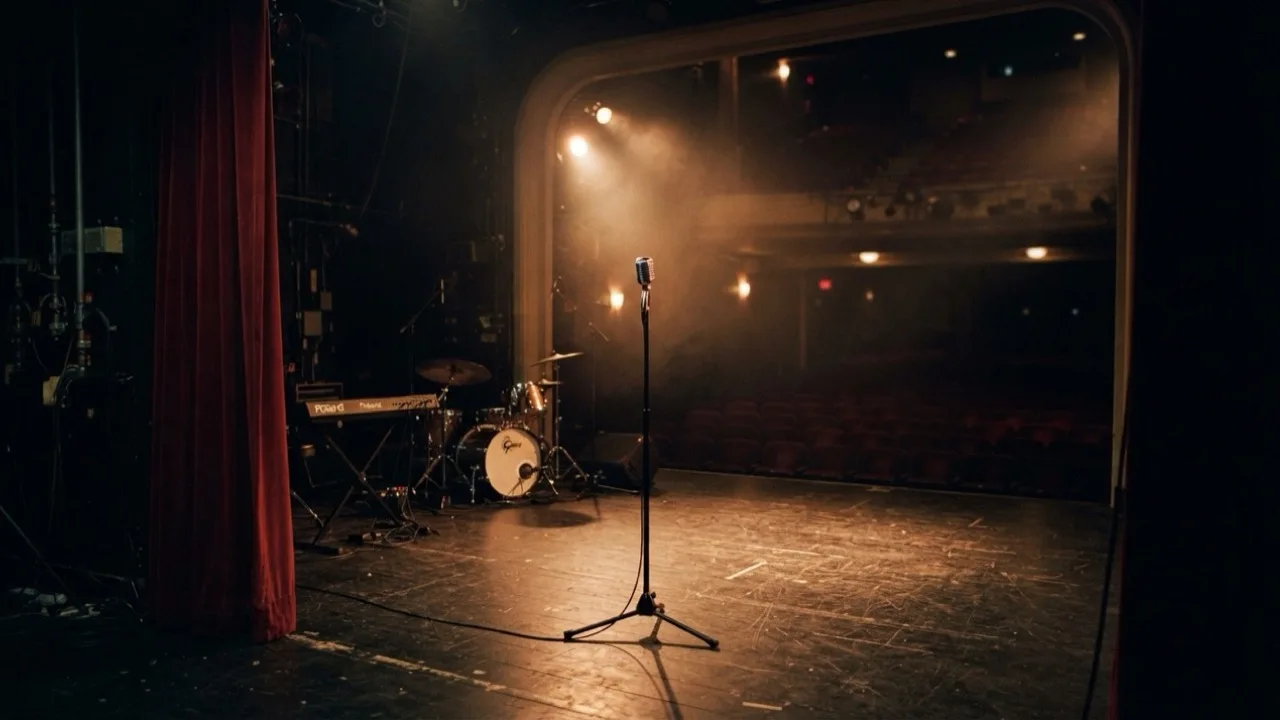
Donell Jones concert: what people are really searching for
Type his name into a search bar this week and the box fills in the same way for almost everyone: concert, tickets, tour dates, tonight. That tells you something. Nobody is looking for a biography first. They heard a song in a car or saw a poster in a city they are driving through, and they want to know one thing: is he playing anywhere near me, and how do I get in the room? It is the same instinct that sends people hunting for a stadium country show they only heard about second hand, except Donell Jones works at a very different scale, and that changes how you find him.
He is not a stadium act and has never tried to be. His live year is built out of one-off bookings rather than one big branded tour: theatres that seat a couple of thousand, casino ballrooms, city summer festivals, private and corporate bookings, cruise-ship line-ups, and the multi-artist R&B package bills that fill arenas by putting five or six familiar names on one poster. That means dates appear in clusters, often announced only weeks ahead, which is exactly why a single national tour page rarely tells the whole story. Fans who follow him seriously tend to keep a running list, the way some households keep everything on a shared screen in the kitchen where dates cannot be missed.
How to find genuine Donell Jones tour dates
Start with his own social accounts, because that is where a booking usually surfaces first, often as a flyer posted by the promoter and reshared. Then check the major ticketing platforms by city rather than by artist, since local promoters sometimes list a package show under the headline act or the festival name instead of every performer on the bill. If a listing site shows a date but no venue, no time and no seat map, treat it as a placeholder rather than a confirmed show. Resale pages are notorious for spinning up speculative listings for shows nobody has actually announced, and prices there routinely sit well above face value.
City-level searching is the trick most people miss. Fans of other touring artists have learned the same habit, whether they are chasing a singer-songwriter's West Coast dates or tracking down a producer's late-night club billing. Search the artist name plus your city, plus the year, and then check the venue's own events calendar directly. Festivals are worth watching too: R&B and soul heritage line-ups are announced in waves, and a name can appear on a bill without any separate tour announcement, which is how a lot of people discover their favourite acts at the big multi-day festivals whose posters get picked apart online. If the show is far from home, book the room before the ticket, because theatre-district hotels near a venue behave a lot like the city-centre hotels that sell out around a big event.
What a Donell Jones set actually sounds like
The catalogue does the work. A crowd turns up for Where I Wanna Be, for U Know What's Up, for Knocks Me Off My Feet, for Shorty (Got Her Eyes on Me), for You Should Know, This Luv and Put Me Down. On a shared bill each artist typically gets a compressed run of the biggest songs, so expect the hits stacked tight; on a headline night there is more room for album cuts and for the long, unhurried vocal stretches that his fans consider the whole point. His records were built around a soft, close, conversational voice rather than acrobatics, which is why they translate so well to a room where you can hear a band breathe. If you want to hear how much of the arrangement is really carrying those songs, strip them yourself with one of the free tools that pull a lead vocal away from the instrumental and listen to what is left underneath.
Who is Donell Jones?
Donell Jones is his real name, not a stage construction, which already sets him slightly apart in a genre where research often starts with working out the name on the birth certificate behind the one on the record. He was born in Chicago on 22 May 1973, which makes him 53 this year. The birthday matters more than usual in his story: he named a whole album Journey of a Gemini after it.
He arrived as a writer before he arrived as a star. That path, craft first and spotlight later, is the same one taken by the songwriters who spend years writing before anyone learns their name, and it shaped everything about how he works. Signed to LaFace, the Atlanta label built by L.A. Reid and Babyface, he released his debut My Heart in 1996, and it introduced two things at once: a singer who sounded like he was talking to one person rather than a crowd, and a writer who put his own name on nearly everything he sang.
The breakthrough came in 1999 with Where I Wanna Be. The title track became a slow-burn standard, and U Know What's Up, featuring Lisa Lopes of TLC, pushed him onto pop radio in the United States and across Europe. He followed it with Life Goes On in 2002 and Journey of a Gemini in 2006, then kept releasing through the 2010s with records including Lyrics, Forever and 100% Free, increasingly on his own terms rather than a major label's.
What does Donell Jones do day to day?
Less of the pop-machine cycle, more of the working-musician one. Writing and recording at his own pace, producing, licensing older songs, and above all performing. That combination is the ordinary shape of a career for an artist with a deep catalogue and a loyal audience, the same steady rhythm that keeps veteran players filling rooms decades after their first hit. His songs also live a quiet second life as first-dance records at weddings, which is its own kind of longevity and turns up constantly in the sort of advice couples trade about the music at their own ceremony.
Why is Donell Jones trending now?
The mechanics are worth understanding, because they explain the spike better than any single headline. Search interest in artists like him moves in bursts tied to live dates and to social clips: a lyric surfaces on video and a generation that was too young the first time discovers the record, then the streaming numbers move, then promoters notice, then a bill gets announced and everybody searches at once. That loop is why old songs get pulled apart line by line all over again, the way listeners now argue over what a track's references actually mean. Here at fotobreak we watch that pattern constantly: the queries that surge are the practical ones, because a search engine's summary box will happily tell you who somebody is and almost never tells you where they are playing on a Saturday in your town.
The people around him
The collaboration everybody remembers is with Lisa Lopes, the TLC rapper who guested on his biggest crossover single and who died in 2002. Beyond that, his world is the late-1990s and 2000s R&B scene: label bosses at LaFace, the producers and engineers who built those records, and a run of contemporaries whose names sit naturally alongside his on a festival poster, among them Carl Thomas, Case, Joe, Dave Hollister, Avant, Jaheim and Ginuwine. If you like his register, that list is where to go next.
His private life is not the story, and he has never pushed it forward. Curiosity about who an artist is dating drives enormous search traffic, from the questions that follow a young jazz-pop singer everywhere to basic factual queries about a Latin superstar's official status. With Donell Jones, that curiosity mostly comes up empty, and that appears to be a deliberate choice worth respecting.
Where to follow him, and what comes next
Instagram and Facebook are the most reliable places for show announcements, and the full catalogue is on every major streaming service, which is the cheapest way to prepare for a set. On earnings, treat the figures floating around with real caution: the net worth numbers published for artists at this level are estimates assembled from guesswork, the same problem that dogs any attempt at pinning down what a working professional in a niche field actually takes home. What is publicly clear is the model, an artist who owns his songwriting and books his own year.
What comes next looks like more of the same, in the best sense: new music when he decides it is ready, and a steady stream of live dates announced city by city. Set an alert on his accounts and on your local theatre's calendar, and check both monthly. And if his voice sends anyone in the house toward making their own tracks, the free browser experiments at a music lab built for beginners are a decent first step, the same on-ramp that produced plenty of the newer names now breaking out of bedroom studios.
People also ask
Is Donell Jones still performing concerts?
Yes. He works steadily as a live performer, mainly through theatre shows, casino ballrooms, city festivals and multi-artist R&B package bills rather than one long branded national tour. Because dates are often announced only weeks ahead by local promoters, the most reliable sources are his own social accounts and the venue's own events calendar, checked city by city.
What songs does Donell Jones perform live?
Sets are built around his best-known records, including Where I Wanna Be, U Know What's Up, Knocks Me Off My Feet, Shorty (Got Her Eyes on Me), You Should Know, This Luv and Put Me Down. On a shared package bill the hits come stacked tightly; on a headline night there is more room for album cuts and longer vocal passages.
How old is Donell Jones and where is he from?
He was born in Chicago on 22 May 1973, which makes him 53 in 2026. The Gemini birthday gave his 2006 album Journey of a Gemini its title.
What is Donell Jones best known for?
He is best known as the singer and songwriter behind the 1999 album Where I Wanna Be and its singles, including U Know What's Up featuring Lisa Lopes of TLC. He signed to LaFace Records, debuted with My Heart in 1996, and is unusual in R&B for writing and producing the bulk of his own material rather than recording songs handed to him.
