Cameron Winter at Carnegie Hall: why the concert became a film
Cameron Winter is the Geese frontman whose sold-out 2025 solo concert is now becoming a major live album and concert film.
What is Cameron Winter at Carnegie Hall?
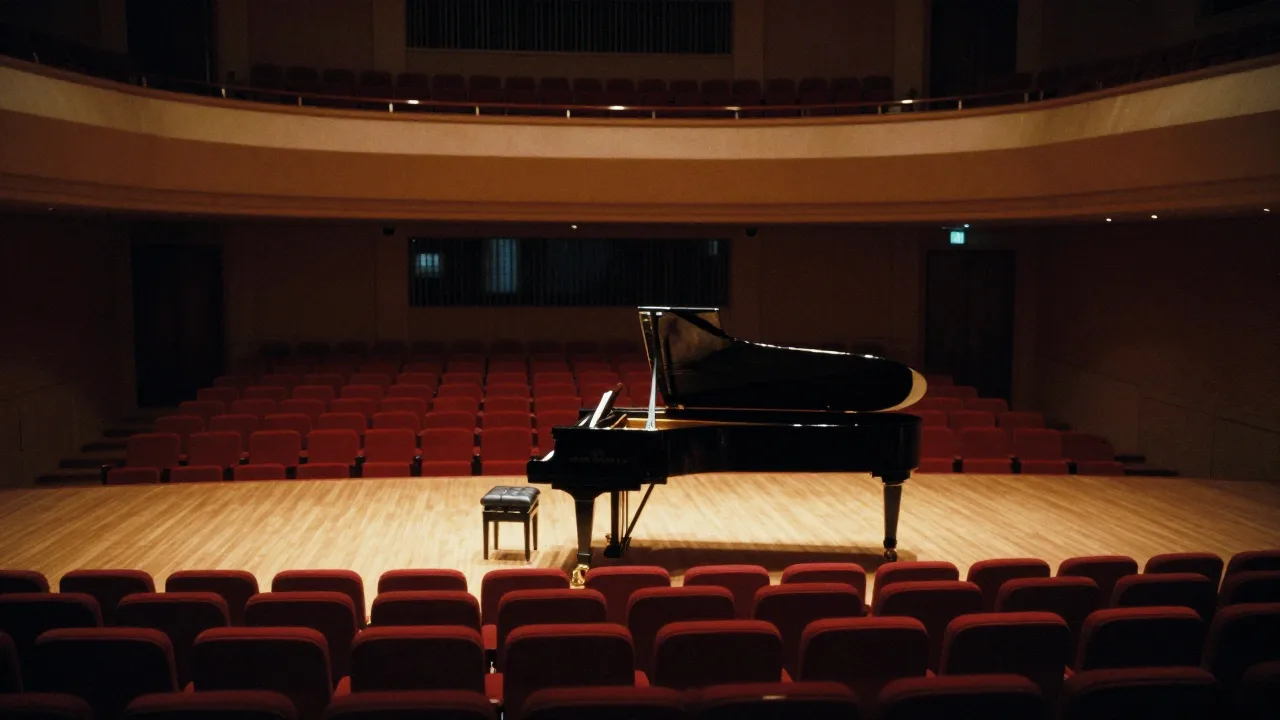
Cameron Winter at Carnegie Hall is a 75-minute concert film built around the Brooklyn musician’s sold-out solo performance at Carnegie Hall in December 2025. The show was filmed on 35mm and 16mm by director Paul Thomas Anderson, with filmmaker Benny Safdie and producer Ariel Rechtshaid also part of the crew. It is not a conventional life story with talking heads or a made-up backstage drama. It is a document of one unusually intimate night in a very large room: Winter at the piano, performing songs associated with his solo record Heavy Metal, plus material that had not yet been released. The film is reaching audiences through special screenings this fall, while his first live album, Live at Carnegie Hall, arrives October 9. That combination explains the search spike. People are not looking up a random old concert. They are trying to work out why a young indie-rock singer has a Paul Thomas Anderson film, a Carnegie Hall live LP, and an expanding audience all at once.
The basic answer is that the concert captured a turning point. Winter had already become known as the singer, songwriter, keyboard player, and guitarist in Geese, but the Carnegie Hall date put the solo version of his work at the center. A stripped-back performance can make a song feel newly exposed, especially in a hall associated with formal musical milestones. Readers who enjoy watching how a live moment changes an artist’s public story may also find Jeezy’s concert story and Luke Combs’s concert coverage useful points of comparison, even though Winter’s musical world is very different.
Who is Cameron Winter?
Cameron Winter was born in Brooklyn, New York, on March 4, 2002, making him 24 at the time of writing. He is a New York-based musician best known as the frontman of Geese, the adventurous rock band he formed with school friends while they were teenagers. His public work is split between the restless, full-band sound of Geese and the looser, piano-led songs he has released under his own name. That is an important distinction for anyone arriving through the Carnegie Hall search. Winter is not a classical pianist making an unexpected pop appearance at the venue. He is a rock musician whose songwriting often has the room, unpredictability, and emotional directness associated with folk and singer-songwriter records.
Geese began in 2016 with fellow Brooklyn students Emily Green, Foster Hudson, Dominic DiGesu, and Max Bassin. The group earned attention for refusing to stay in one lane, moving from tense guitar music toward wider, stranger arrangements across albums including Projector, 3D Country, and 2025’s Getting Killed. Winter’s day-to-day job, in the practical sense, is still the work of a working musician: writing songs, rehearsing, recording, playing keys and guitar, singing, touring, and moving between band projects and solo material. The broader music world has many versions of that long career arc, from Billy Gibbons’s guitar-led career and Angus Young’s stage legacy to Donell Jones’s R&B work.
What does Cameron Winter sound like on his own?
Winter’s solo debut, Heavy Metal, was released in 2024, despite a title that can send first-time listeners in the wrong direction. It is not a metal record. Its songs are led by piano, voice, shifting melodies, and lyrics that leave space for ambiguity. His singing can move from a close, conversational murmur to a sudden full-throated cry, which is one reason his live sets attract people who may not know Geese yet. The Carnegie Hall recording preserves that tension rather than smoothing it out. Its announced track list includes songs from Heavy Metal, such as Love Takes Miles, Nina + Field of Cops, $0, and Vines, alongside three then-unreleased songs.
It is tempting to reduce every new songwriter to a familiar influence, but Winter makes more sense as part of a continuing conversation between rock, folk, theatrical performance, and improvisation. A listener drawn in by his piano-centered side might also recognize why people look at artists such as Laufey in the public eye, while fans of emotionally direct modern songwriting may know Noah Kahan’s Los Angeles chapter. Those are reference points, not claims that the artists sound alike. Winter’s appeal comes from making the songs feel unsettled enough that a performance can change their shape.
Why is Cameron Winter trending now?
The timing is doing much of the work. The Carnegie Hall concert took place in December 2025, but it is now being revisited in two formats that travel much farther than a single New York show. The live album gives fans a permanent version of the set. The film turns a concert that only the room could originally hold into a cinema event. Anderson’s involvement brings in moviegoers who may know his films better than Geese, while Geese fans have a reason to see what he made from Winter’s performance. The result is a crossover search trend, where music fans, film fans, and people simply curious about Carnegie Hall meet at the same phrase.
There is also a useful lesson in the attention. A concert film can now be an event in its own right, especially when it is photographed on film and shown in theaters rather than quietly added to a streaming catalogue. The physical format gives the project a sense of occasion, but the heart of it remains the performance. That is why the story belongs beside coverage of live culture, from the changing Lollapalooza scene to John Summit’s Los Angeles rise. At fotobreak, the most interesting part is not merely that a famous director showed up. It is that a performance by a young bandleader created enough feeling and curiosity to become a shared cultural object.
Who are the people around Cameron Winter?
Geese remains the essential starting point. Winter’s solo career did not arrive from nowhere or replace the band. It developed alongside a group whose members grew up making music together, and whose changing sound gave him room to test different approaches. His father has publicly been described as a composer for television and film, a small piece of family context that helps explain why music was not an alien language at home. Beyond that, Winter keeps the public focus where it belongs, on the records and shows rather than on private family life.
The Carnegie Hall project adds a second circle of collaborators. Anderson directed and shot the concert film, Safdie worked on the production, and Rechtshaid was part of the crew. Their presence places Winter’s music in a larger creative community without changing what the film is about. The central subject is still one performer meeting a hall and an audience. For a wider sense of how musicians can build a career over decades while staying connected to collaborators and live audiences, see former Foreigner singer Lou Gramm, Engelbert Humperdinck’s new rock album, and folk musician Randy Burns.
Where can fans follow Cameron Winter and what happens next?
The most reliable places to watch are Winter’s official channels, Geese’s official channels, Partisan Records announcements, and the concert-film site, which is collecting interest for screening updates. The practical dates matter: Live at Carnegie Hall is scheduled for October 9, and the film is rolling out through special theatrical screenings this fall. Availability will vary by city, so the official screening page is more dependable than a social-media repost or an old ticket listing. Winter has also announced touring activity beginning later in the year, which means the Carnegie Hall project is likely to serve as a doorway into the next stretch of shows rather than a farewell document.
There is no reliable public figure for what Winter earns, and it would be irresponsible to guess from ticket prices, records, or streaming attention. What is public is the work readers can actually hear and see: Geese albums, Heavy Metal, the forthcoming live album, and the concert film. People experimenting with music at home can even begin with accessible tools such as Chrome Music Lab or learn how AI vocal-remover tools work. For Winter, though, the next meaningful answer will come in the room, or on the screen, when audiences finally get to see why that Carnegie Hall performance has kept growing after the applause ended.
People also ask
What is Cameron Winter at Carnegie Hall?
It is a 75-minute concert film directed by Paul Thomas Anderson, filmed during Cameron Winter’s sold-out December 2025 solo performance at Carnegie Hall.
When is Cameron Winter Live at Carnegie Hall released?
The live album is scheduled for release on October 9, 2026.
Is Cameron Winter in a band?
Yes. He is the frontman of the Brooklyn rock band Geese, while also releasing solo music.
How old is Cameron Winter?
Cameron Winter was born on March 4, 2002, making him 24 in September 2026.
